Tile Installation Time Breakdown
Laying bathroom floor tiles takes 1 to 3 days for most residential projects, depending on bathroom size, tile type, subfloor condition, and curing requirements. A small bathroom with a level subfloor and standard ceramic tiles can be completed within 6–10 hours of active work, but adhesive and grout curing extend the total usable time to 24–72 hours.
Bathroom floor tiling is a process-driven construction task with sequential dependencies. Tile placement itself is only one phase. Surface preparation, adhesive curing, grout application, and sealing collectively determine the total duration. Faster installation occurs when the substrate is already level, moisture-controlled, and ready for tiling.
Small bathrooms under 40 square feet typically require 1 day, including preparation and installation. Medium-sized bathrooms between 40–100 square feet usually take 2 days due to extended layout planning and curing intervals. Larger bathrooms or projects with complex layouts, such as diagonal patterns or natural stone tiles, extend the timeline to 3 days or more.
Professional tile installers optimise time through efficient workflow sequencing, correct adhesive selection, and tile layout planning, while DIY projects often take longer due to inexperience and correction cycles.
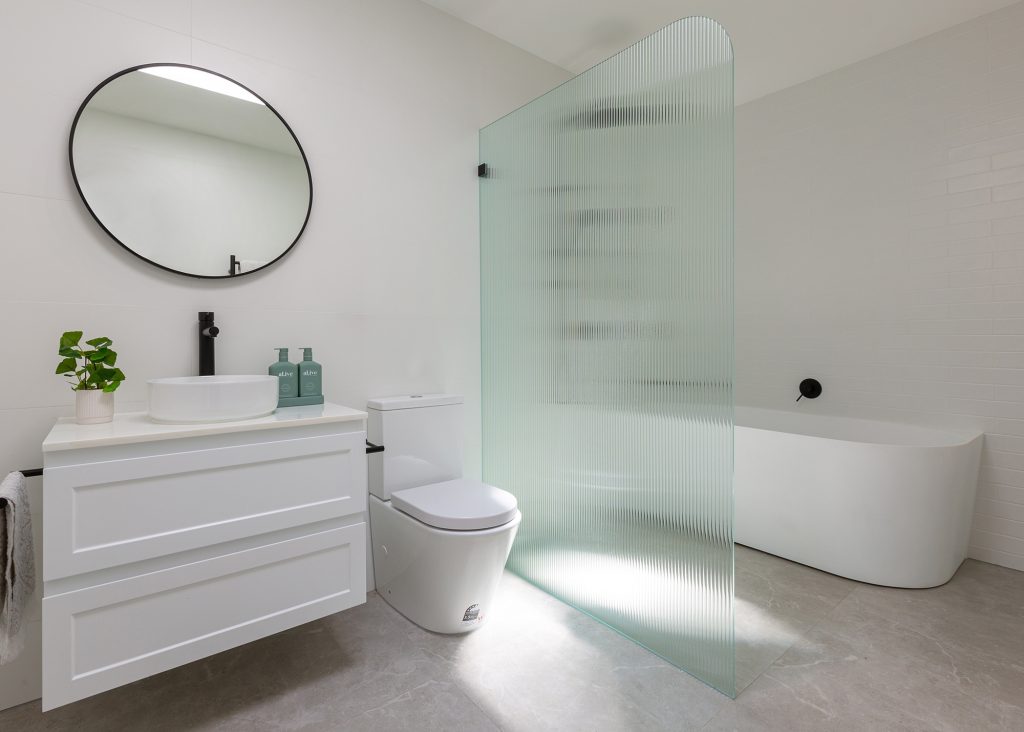
Bathroom Floor Tiling Time Overview
| Bathroom Size | Active Work Time | Total Project Time | Key Conditions |
|---|---|---|---|
| Small (<40 sq ft) | 6–10 hours | 1 day (24 hours) | Level subfloor, simple layout, ceramic tiles |
| Medium (40–100 sq ft) | 1–2 days | 2 days (24–48 hours) | Standard prep, moderate layout complexity |
| Large (100+ sq ft) | 2–3 days | 3+ days (48–72+ hours) | Complex patterns, large tiles, extended curing |
What Determines How Long Bathroom Floor Tiling Takes?
Bathroom floor tiling duration depends on material properties, surface conditions, environmental factors, and workflow complexity. Each variable directly affects installation speed, curing time, and error risk. Accurate time estimation requires evaluating these factors together rather than in isolation.
Primary Factors That Affect Tiling Time
| Factor | Impact on Time | Explanation |
|---|---|---|
| Subfloor Condition | High | Uneven or damaged subfloors require leveling, patching, or backer board installation, adding 4–24 hours |
| Tile Type | Medium–High | Porcelain and natural stone tiles are denser and harder to cut than ceramic, increasing labour time |
| Tile Size | Medium | Large-format tiles reduce tile count but require precise leveling; small tiles increase placement time |
| Layout Complexity | High | Diagonal, herringbone, or custom patterns increase cutting, alignment, and planning time |
| Adhesive Type | High | Standard thin-set requires 12–24 hours curing; rapid-set adhesives reduce waiting time |
| Grout Type | Medium | Epoxy grout takes longer to apply but cures faster; cement grout is easier but slower to cure |
| Environmental Conditions | Medium | High humidity and low temperature slow adhesive and grout curing |
Subfloor Preparation and Structural Readiness
Subfloor condition is the most time-critical factor in bathroom tiling. A level, clean, and dry substrate allows immediate tile installation. Uneven surfaces require self-leveling compounds, cement backer boards, or waterproof membranes, extending preparation time significantly.
Concrete subfloors may need moisture testing and crack repair, while wooden subfloors often require reinforcement and underlayment installation. These preparatory steps can add several hours to a full day before tile placement begins.
Tile Material and Cutting Complexity
Tile density and composition directly affect cutting speed, tool requirements, and installation precision. Ceramic tiles are easier to cut and install, while porcelain tiles require wet saws and slower cutting speeds. Natural stone tiles, such as marble or granite, introduce additional steps like sealing and edge finishing.
Smaller tiles increase placement repetition, while large-format tiles demand precise leveling systems to prevent lippage. Both extremes can increase total installation time under different conditions.
Adhesive, Grout, and Curing Dependencies
Tile installation follows a dependency chain, where each phase must reach a minimum curing threshold before the next begins. Thin-set mortar typically requires 12–24 hours before grouting. Grout then requires 24–48 hours to cure before full use.
Rapid-set adhesives reduce waiting time but require faster application and precision, limiting adjustment windows. Incorrect timing between stages can lead to tile displacement, weak bonding, or grout failure, increasing rework time.
Layout Planning and Spatial Constraints
Tile layout determines cut frequency, alignment precision, and visual symmetry, all of which affect installation duration. Straight grid layouts are the fastest to execute, while diagonal or patterned layouts require advanced planning and additional cuts, increasing labor time by 20–50%.
Bathrooms with multiple fixtures—such as toilets, vanities, and drains—introduce obstacle-based cutting, slowing installation further.
Environmental and Site Conditions
Temperature and humidity influence adhesive curing rates and material behavior. Low temperatures slow chemical curing, while high humidity prolongs drying time. Proper ventilation and controlled conditions help maintain predictable timelines.
Step-by-Step Timeline of Laying Bathroom Floor Tiles
Bathroom floor tiling follows a sequential workflow where each stage depends on the previous phase reaching structural or chemical stability. Skipping or accelerating one step affects adhesion strength, tile alignment, and long-term durability. A clear step-by-step timeline ensures accurate duration estimation and prevents installation errors.
Step 1: Surface Preparation (2–6 Hours)
Surface preparation defines the structural integrity of the entire tile system. The subfloor must be clean, level, dry, and capable of supporting tile load.
Key actions include:
- Removing old flooring and debris
- Cleaning dust, grease, and moisture
- Leveling uneven areas with self-leveling compound
- Installing cement backer board or underlayment
- Applying waterproofing membrane in wet zones
Poor preparation leads to tile cracking, adhesive failure, and uneven surfaces, increasing long-term repair time.
Step 2: Dry Layout Planning (1–2 Hours)
Dry layout planning establishes tile positioning, symmetry, and cut distribution before adhesive application.
Key actions include:
- Marking center lines for alignment
- Testing tile placement without adhesive
- Adjusting layout to minimize small edge cuts
- Planning around fixtures (toilet flange, pipes, corners)
Accurate layout planning reduces cutting errors and rework, improving installation efficiency.
Step 3: Adhesive Application (30–60 Minutes per Section)
Tile adhesive (thin-set mortar) creates the bonding layer between tile and substrate.
Key actions include:
- Mixing thin-set to correct consistency
- Applying adhesive with a notched trowel
- Working in small sections to prevent premature drying
Improper adhesive application causes weak bonding and tile movement, increasing correction time.
Step 4: Tile Placement and Alignment (4–10 Hours)
Tile placement is the most labor-intensive phase, requiring precision and consistency.
Key actions include:
- Placing tiles according to layout lines
- Using spacers for uniform grout joints
- Cutting tiles to fit edges and obstacles
- Checking level to prevent lippage
Complex layouts or large-format tiles increase alignment time due to precision requirements.
Step 5: Adhesive Curing (12–24 Hours)
Adhesive curing is a non-active but critical waiting phase where tiles achieve structural bonding.
Key conditions:
- No foot traffic during curing
- Stable temperature and humidity
- Adequate ventilation
Premature movement during this phase leads to tile displacement and bond failure.
Step 6: Grouting (2–4 Hours)
Grouting fills the spaces between tiles and provides structural cohesion and water resistance.
Key actions include:
- Applying grout with a rubber float
- Pressing grout into joints evenly
- Cleaning excess grout from tile surfaces
Grout type (cement vs epoxy) affects both application time and curing speed.
Step 7: Final Curing and Sealing (24–48 Hours)
Final curing ensures full system stability and moisture resistance.
Key actions include:
- Allowing grout to cure completely
- Applying sealant (for natural stone or porous grout)
- Performing final cleaning and inspection
Full usability is typically achieved after 48–72 hours, depending on materials and conditions.
Process Timeline Summary
| Step | Phase | Time Required | Dependency |
|---|---|---|---|
| 1 | Surface Preparation | 2–6 hours | None |
| 2 | Layout Planning | 1–2 hours | Prep completed |
| 3 | Adhesive Application | 0.5–1 hour per section | Layout finalized |
| 4 | Tile Placement | 4–10 hours | Adhesive applied |
| 5 | Adhesive Curing | 12–24 hours | Tiles installed |
| 6 | Grouting | 2–4 hours | Adhesive cured |
| 7 | Final Curing/Sealing | 24–48 hours | Grouting completed |
How Long Does Each Tiling Step Take? (Detailed Time Estimates)
Bathroom floor tiling time is best understood by quantifying each installation phase individually. Each step has a measurable duration influenced by material behavior, labor intensity, and curing dependencies. Breaking down time per step improves accuracy in project planning and expectation management.
Detailed Time Allocation per Step
| Installation Step | Minimum Time | Average Time | Maximum Time | Time Sensitivity Drivers |
|---|---|---|---|---|
| Surface Preparation | 2 hours | 4–6 hours | 24+ hours | Subfloor damage, leveling needs, waterproofing |
| Layout Planning | 1 hour | 1–2 hours | 3+ hours | Room shape, fixture complexity |
| Adhesive Application | 30 minutes | 1–2 hours | 3+ hours | Work speed, adhesive type |
| Tile Placement | 4 hours | 6–10 hours | 2+ days | Tile size, pattern complexity |
| Adhesive Curing | 12 hours | 12–24 hours | 48 hours | Temperature, humidity |
| Grouting | 2 hours | 2–4 hours | 6+ hours | Grout type, joint size |
| Final Curing & Sealing | 24 hours | 24–48 hours | 72+ hours | Sealant type, ventilation |
Time Variability by Step
Surface Preparation: Highest Time Variability
Surface preparation ranges from quick cleaning to full structural correction. A level concrete base requires minimal effort, while damaged or uneven subfloors require patching, reinforcement, or self-leveling compounds, significantly increasing time.
Tile Placement: Highest Labor Intensity
Tile placement consumes the most active working hours. Straight grid layouts with standard tiles progress quickly, while diagonal patterns, mosaics, or natural stone installations increase time due to:
- Frequent cutting
- Precision alignment
- Edge finishing requirements
Large-format tiles reduce tile count but require leveling systems, slowing placement speed.
Curing Phases: Highest Time Dependency
Curing phases (adhesive and grout) introduce non-negotiable waiting periods. These steps depend on:
- Chemical bonding processes
- Ambient temperature and humidity
- Material specifications from manufacturers
Rapid-set materials reduce curing time but demand faster execution and higher precision, increasing the risk of errors.
Active Work Time vs Total Project Time
| Time Type | Duration | Description |
|---|---|---|
| Active Labor Time | 6–12 hours | Physical installation work (prep, layout, tiling, grouting) |
| Passive Waiting Time | 24–60+ hours | Adhesive and grout curing phases |
| Total Project Duration | 1–3+ days | Full timeline including all dependencies |
Bathroom Size vs Time Required
Bathroom size directly influences tile installation duration, material handling, layout complexity, and curing distribution. Larger areas increase tile count, cutting frequency, and alignment checks, while smaller spaces introduce tight working conditions and obstacle-based adjustments. Time estimation must consider both surface area and spatial constraints.
Time Estimation by Bathroom Size
| Bathroom Size | Area Range | Active Work Time | Total Project Time | Complexity Factors |
|---|---|---|---|---|
| Small | <40 sq ft | 6–10 hours | ~1 day (24 hours) | Tight space, fixture cuts |
| Medium | 40–100 sq ft | 1–2 days | 2 days (24–48 hours) | Balanced layout and cutting |
| Large | 100+ sq ft | 2–3 days | 3+ days (48–72+ hours) | More tiles, alignment precision |
Small Bathrooms: High Constraint, Faster Completion
Small bathrooms typically require less total tile coverage, reducing installation time. However, limited space introduces:
- More precision cuts around fixtures (toilet, sink, pipes)
- Restricted movement for installers
- Increased attention to alignment in tight areas
Despite these constraints, small bathrooms are often completed within one day, including preparation and installation, followed by curing.
Medium Bathrooms: Balanced Time and Complexity
Medium-sized bathrooms represent the standard residential scenario, where:
- Tile coverage increases
- Layout planning becomes more relevant
- Cutting frequency remains moderate
This category typically requires two days, balancing active work and curing intervals. Most DIY and professional projects fall into this range, making it the most predictable timeline.
Large Bathrooms: Extended Time and Precision Requirements
Large bathrooms increase installation time non-linearly, due to:
- Higher tile volume
- Greater need for alignment consistency across a wider surface
- Increased risk of leveling issues (lippage)
Large-format tiles and custom layouts further extend timelines. These projects often require 3 or more days, especially when combined with complex patterns or premium materials.
Size vs Efficiency Relationship
Larger spaces benefit from workflow efficiency, as open areas allow faster tile placement with fewer interruptions. Smaller bathrooms, despite having less area, may experience slower per-square-foot installation due to constraints and cutting requirements.
Professional vs DIY Tile Installation Time
Bathroom floor tiling time varies significantly between professional installers and DIY users due to differences in experience, tool efficiency, workflow optimization, and error rates. Time is not only a function of effort but also of decision speed, precision, and rework frequency.
Time Comparison: Professional vs DIY
| Installation Type | Active Work Time | Total Project Time | Key Characteristics |
|---|---|---|---|
| Professional Installer | 6–10 hours | 1–2 days | Optimized workflow, minimal errors |
| DIY (Beginner–Intermediate) | 10–20+ hours | 2–4+ days | Learning curve, slower execution |
| DIY (Experienced) | 8–14 hours | 2–3 days | Improved efficiency, fewer corrections |
Professional Tile Installation: Optimized Execution
Professional tile installers reduce time through:
- Workflow sequencing (prep → layout → install without delays)
- Advanced tools (wet saws, tile leveling systems, laser guides)
- Accurate adhesive mixing and application
- Experience in handling different tile materials and layouts
Professionals minimize downtime between steps and avoid rework cycles, which significantly shortens total duration.
DIY Installation: Learning Curve and Delays
DIY projects typically take longer due to:
- Slower decision-making during layout planning
- Inconsistent adhesive application
- Trial-and-error during tile cutting
- Corrections for alignment or spacing issues
Beginners often pause between steps to verify methods, increasing both active time and total project duration.
Error Impact on Time
Errors directly increase tiling time through removal, adjustment, and reinstallation. Common time-extending mistakes include:
- Uneven tile placement (lippage)
- Incorrect adhesive consistency
- Misaligned layout lines
- Premature grouting before proper curing
Professionals reduce these risks through process control and experience, while DIY installers often encounter at least one correction cycle.
Tool Efficiency and Time Reduction
Access to professional-grade tools significantly impacts speed:
- Wet tile saws improve cutting accuracy and reduce breakage
- Tile leveling systems prevent alignment issues
- Pre-mixed adhesives simplify application
DIY installers using limited or manual tools experience slower execution and higher error rates.
Cost–Time Trade-Off
| Approach | Cost | Time | Risk |
|---|---|---|---|
| Professional | Higher | Shorter | Low |
| DIY | Lower | Longer | Medium–High |
Choosing between professional and DIY installation involves a trade-off between financial cost and time efficiency, along with the risk of errors affecting durability.
Fastest Way to Tile a Bathroom Floor
The fastest way to tile a bathroom floor depends on reducing preparation time, minimizing installation complexity, and shortening curing duration without compromising structural integrity. Speed is achieved through material selection, workflow optimization, and error prevention, not by skipping essential steps.
Time-Optimization Strategies
| Strategy | Time Saved | Impact Level | Explanation |
|---|---|---|---|
| Use Rapid-Set Adhesive | 12–24 hours | High | Reduces curing time before grouting |
| Choose Large-Format Tiles | 20–40% labor reduction | High | Fewer tiles = fewer placements and joints |
| Prepare Subfloor in Advance | 4–24 hours | High | Eliminates delays during installation day |
| Use Straight Layout Pattern | 20–50% faster | High | Minimizes cutting and alignment complexity |
| Pre-Mixed Adhesive | 1–2 hours | Medium | Removes mixing time and errors |
| Tile Leveling System | Reduces rework | Medium | Prevents lippage and corrections |
Material Selection for Speed
Material choice directly affects both installation speed and curing duration:
- Ceramic tiles install faster due to easier cutting
- Large-format tiles reduce placement repetition
- Rapid-set thin-set mortar shortens waiting time between steps
- Fast-curing grout allows earlier usability
Natural stone and dense porcelain tiles slow down installation due to cutting difficulty and sealing requirements.
Workflow Optimization Techniques
Efficient tiling follows a continuous workflow with minimal interruptions:
- Complete subfloor preparation before installation day
- Lay out tiles in advance to eliminate decision delays
- Work in sections to maintain adhesive consistency
- Use proper tools to avoid breakage and re-cuts
Interruptions between steps increase total duration more than slow but continuous work.
Minimizing Cutting and Adjustments
Tile cutting is one of the most time-consuming activities. Speed increases when:
- Layout minimizes small edge cuts
- Tile size aligns with room dimensions
- Obstacles are pre-measured and marked
Straight grid layouts significantly reduce cutting time compared to diagonal or patterned designs.
Reducing Curing Time Safely
Curing time cannot be eliminated, but it can be optimized:
- Use rapid-set adhesives (ready for grout in 2–6 hours)
- Maintain proper temperature (20–25°C) for faster curing
- Ensure good ventilation to control moisture
Skipping curing time leads to tile displacement and long-term failure, increasing total project time due to repairs.
Fastest Possible Timeline Scenario
| Scenario | Timeline |
|---|---|
| Small bathroom + rapid-set materials + simple layout | 1 day completion |
| Medium bathroom + optimized workflow | 1–2 days |
| Complex layout or standard materials | 2–3 days |
Common Delays That Increase Tiling Time
Bathroom floor tiling delays occur when process dependencies are interrupted, materials behave unpredictably, or installation errors require correction. Most time overruns are not caused by the tiling itself, but by preparation issues, curing mismanagement, and rework cycles.
Primary Causes of Tiling Delays
| Delay Factor | Time Impact | Severity | Root Cause |
|---|---|---|---|
| Uneven Subfloor | +4–24 hours | High | Requires leveling, patching, or underlayment |
| Moisture Problems | +12–48 hours | High | Waterproofing and drying delays |
| Complex Tile Layout | +20–50% time | High | Increased cutting and alignment effort |
| Incorrect Adhesive Use | +12–24 hours | High | Weak bonding or reinstallation required |
| Tile Cutting Errors | +2–6 hours | Medium | Breakage, re-cuts, material waste |
| Premature Grouting | +24+ hours | High | Adhesive not cured, leading to failure |
| Environmental Conditions | +12–24 hours | Medium | Low temperature or high humidity slows curing |
Subfloor Issues: The Most Common Delay Source
Subfloor problems introduce the largest and most unpredictable delays. Common issues include:
- Uneven or sloped surfaces
- Cracks in concrete
- Weak or flexible wooden flooring
- Residual moisture
These conditions require leveling compounds, reinforcement, or drying time, delaying tile placement by several hours or even a full day.
Moisture and Waterproofing Delays
Bathrooms are high-moisture environments. Delays occur when:
- Waterproofing membranes require curing
- Subfloor moisture levels exceed safe limits
- Sealants need additional drying time
Skipping moisture control leads to adhesive failure, mold growth, and tile lifting, increasing long-term repair time.
Layout Complexity and Design Choices
Complex designs increase installation time due to:
- Higher cutting frequency
- Precision alignment requirements
- Pattern continuity across the floor
Diagonal layouts, herringbone patterns, and mosaics can extend installation time by 20–50% or more compared to standard grid layouts.
Material Handling and Application Errors
Incorrect material use leads to time-consuming corrections:
- Improper adhesive consistency reduces bonding strength
- Uneven adhesive application causes tile lippage
- Using the wrong grout type delays curing or requires removal
Each mistake introduces rework cycles, significantly increasing total project duration.
Curing Mismanagement
Curing phases are time-sensitive and non-negotiable. Delays occur when:
- Grouting is done before adhesive fully cures
- Foot traffic disturbs uncured tiles
- Environmental conditions slow chemical reactions
Improper curing leads to structural instability, requiring partial or complete reinstallation.
Environmental Factors
Temperature and humidity directly affect:
- Adhesive drying speed
- Grout curing time
- Material expansion and contraction
Cold or humid environments slow down curing, while extreme heat may cause premature drying and bonding issues.
Drying and Curing Time: When Can You Walk on Tiles?
Drying and curing time determines when a tiled bathroom floor becomes usable, not when installation ends. Bathroom floor tiles can typically be walked on after 12–24 hours, but full structural strength and moisture resistance develop over 48–72 hours or more, depending on materials and environmental conditions.
Tile Usability Timeline
| Stage | Time After Installation | Usability Level | Conditions |
|---|---|---|---|
| Initial Set | 6–12 hours | Not walkable | Adhesive still soft |
| Light Foot Traffic | 12–24 hours | Limited use | Careful walking, no heavy load |
| Grout Cured | 24–48 hours | Moderate use | Joints stabilized |
| Full Cure | 48–72+ hours | Full use | Maximum strength achieved |
Adhesive Drying vs Chemical Curing
Tile adhesive (thin-set mortar) undergoes two distinct processes:
- Drying: Moisture evaporation from the adhesive
- Curing: Chemical bonding that creates structural strength
Walking on tiles too early interrupts this process, leading to:
- Tile displacement
- Weak bonding
- Uneven surfaces (lippage)
Grout Curing and Joint Stability
Grout stabilizes tile spacing and prevents water penetration. Cement-based grout typically requires:
- 24 hours for initial curing
- 48–72 hours for full strength
Epoxy grout cures faster but requires precise application and cleaning, affecting overall workflow.
Factors That Affect Drying and Curing Time
| Factor | Effect on Time | Explanation |
|---|---|---|
| Temperature | Slows or speeds curing | Cold slows, moderate warmth accelerates |
| Humidity | Extends drying time | High moisture delays evaporation |
| Adhesive Type | Major impact | Rapid-set vs standard thin-set |
| Tile Type | Minor impact | Dense tiles slow moisture release |
| Ventilation | Improves curing | Airflow supports evaporation |
When Can You Fully Use the Bathroom?
Full bathroom usability—including:
- Walking normally
- Installing fixtures (toilet, vanity)
- Exposure to water
is recommended only after 48–72 hours, ensuring both adhesive and grout reach structural stability.
Risks of Using Tiles Too Early
Premature use leads to:
- Tile shifting or sinking
- Cracked or uneven grout lines
- Reduced long-term durability
Correcting these issues often requires tile removal and reinstallation, significantly increasing total project time.
Cost vs Time Relationship in Bathroom Tiling
Bathroom floor tiling involves a direct trade-off between cost, speed, and installation quality. Faster project completion typically requires higher labor costs, premium materials, or advanced tools, while lower-cost approaches often extend the timeline due to slower workflows and increased error risk.
Cost vs Time Comparison
| Approach | Cost Level | Time Required | Efficiency | Risk Level |
|---|---|---|---|---|
| Professional + Standard Materials | High | 1–2 days | High | Low |
| Professional + Rapid-Set Materials | Higher | 1 day | Very High | Low |
| DIY + Standard Materials | Low | 2–4+ days | Medium–Low | Medium–High |
| DIY + Budget Tools | Lowest | 3–5+ days | Low | High |
Labor Cost vs Time Efficiency
Professional installers charge higher rates but deliver:
- Faster completion through experience and workflow optimization
- Fewer errors, reducing rework costs
- Efficient use of materials
Hiring professionals reduces total project time but increases upfront financial cost.
Material Cost Impact on Time
Material selection affects both installation speed and curing duration:
- Rapid-set adhesives and fast-curing grout reduce waiting time
- Large-format tiles reduce placement time but may increase material cost
- Pre-mixed adhesives simplify application but are more expensive
Lower-cost materials often require longer curing times and more careful handling, extending the project.
Tool Investment and Time Reduction
Advanced tools improve efficiency and reduce errors:
- Tile leveling systems prevent alignment issues
- Wet saws improve cutting precision and speed
- Laser levels ensure accurate layout
DIY installers using basic tools spend more time on manual adjustments and corrections.
Hidden Costs of Time Delays
Longer projects introduce indirect costs:
- Bathroom unusable for extended periods
- Increased risk of installation errors
- Potential need for repairs or reinstallation
Time delays can offset initial savings from DIY or low-cost materials.
Speed vs Quality Trade-Off
Attempting to reduce time without proper methods leads to:
- Weak adhesive bonding
- Poor tile alignment
- Incomplete curing
High-speed installation must still follow correct process sequencing to maintain durability.
Tools and Materials That Affect Installation Speed
Bathroom floor tiling speed depends on tool efficiency, material behavior, and compatibility between installation components. The right combination of tools and materials reduces labor time, cutting effort, alignment errors, and curing delays, while improper choices increase rework and slow down workflow.
Key Tools That Impact Tiling Speed
| Tool | Speed Impact | Function | Efficiency Benefit |
|---|---|---|---|
| Wet Tile Saw | High | Precision cutting | Faster, cleaner cuts with less breakage |
| Tile Leveling System | High | Alignment control | Prevents lippage and reduces rework |
| Notched Trowel | Medium | Adhesive application | Ensures even adhesive distribution |
| Laser Level | Medium | Layout accuracy | Speeds up alignment and reduces adjustments |
| Tile Spacers | Medium | Joint consistency | Maintains uniform grout lines |
| Mixing Drill | Medium | Adhesive preparation | Faster and consistent mixing |
Material Choices That Influence Speed
| Material | Speed Impact | Reason |
|---|---|---|
| Ceramic Tiles | High | Easy to cut and install |
| Porcelain Tiles | Medium | Harder, requires slower cutting |
| Natural Stone | Low | Requires sealing and careful handling |
| Large-Format Tiles | High | Fewer tiles to place, fewer joints |
| Mosaic Tiles | Low | High placement repetition |
Adhesive and Grout Selection
Material chemistry directly affects application speed and curing duration:
- Rapid-set thin-set mortar reduces waiting time between installation and grouting
- Pre-mixed adhesives eliminate mixing time and reduce errors
- Epoxy grout cures faster but requires precise, time-sensitive application
- Cement-based grout is easier to apply but takes longer to cure
Choosing the right adhesive–grout combination ensures workflow continuity without unnecessary delays.
Tool Efficiency vs Manual Methods
Manual tools slow down installation due to:
- Inconsistent cutting accuracy
- Increased breakage rates
- Repeated adjustments for alignment
Professional-grade tools improve:
- Precision
- Speed
- Material efficiency
This reduces both active labor time and correction cycles.
System Compatibility and Workflow Speed
Installation speed increases when tools and materials are compatible and used as a system:
- Leveling systems + large tiles = faster alignment
- Rapid-set adhesive + controlled environment = shorter curing
- Precision cutting tools + complex layouts = reduced errors
Mismatch between tools and materials leads to inefficiencies and delays.
Tools and Materials That Affect Installation Speed
Bathroom floor tiling speed depends on tool efficiency, material behavior, and compatibility between installation components. The right combination of tools and materials reduces labor time, cutting effort, alignment errors, and curing delays, while improper choices increase rework and slow down workflow.
Key Tools That Impact Tiling Speed
| Tool | Speed Impact | Function | Efficiency Benefit |
|---|---|---|---|
| Wet Tile Saw | High | Precision cutting | Faster, cleaner cuts with less breakage |
| Tile Leveling System | High | Alignment control | Prevents lippage and reduces rework |
| Notched Trowel | Medium | Adhesive application | Ensures even adhesive distribution |
| Laser Level | Medium | Layout accuracy | Speeds up alignment and reduces adjustments |
| Tile Spacers | Medium | Joint consistency | Maintains uniform grout lines |
| Mixing Drill | Medium | Adhesive preparation | Faster and consistent mixing |
Material Choices That Influence Speed
| Material | Speed Impact | Reason |
|---|---|---|
| Ceramic Tiles | High | Easy to cut and install |
| Porcelain Tiles | Medium | Harder, requires slower cutting |
| Natural Stone | Low | Requires sealing and careful handling |
| Large-Format Tiles | High | Fewer tiles to place, fewer joints |
| Mosaic Tiles | Low | High placement repetition |
Adhesive and Grout Selection
Material chemistry directly affects application speed and curing duration:
- Rapid-set thin-set mortar reduces waiting time between installation and grouting
- Pre-mixed adhesives eliminate mixing time and reduce errors
- Epoxy grout cures faster but requires precise, time-sensitive application
- Cement-based grout is easier to apply but takes longer to cure
Choosing the right adhesive–grout combination ensures workflow continuity without unnecessary delays.
Tool Efficiency vs Manual Methods
Manual tools slow down installation due to:
- Inconsistent cutting accuracy
- Increased breakage rates
- Repeated adjustments for alignment
Professional-grade tools improve:
- Precision
- Speed
- Material efficiency
This reduces both active labor time and correction cycles.
System Compatibility and Workflow Speed
Installation speed increases when tools and materials are compatible and used as a system:
- Leveling systems + large tiles = faster alignment
- Rapid-set adhesive + controlled environment = shorter curing
- Precision cutting tools + complex layouts = reduced errors
Mismatch between tools and materials leads to inefficiencies and delays.
Realistic Timeline Examples (Scenarios)
Bathroom floor tiling timelines vary based on project conditions, material choices, and workflow efficiency. Real-world scenarios provide clearer expectations by combining multiple variables into practical outcomes rather than isolated estimates.
Scenario-Based Time Estimates
| Scenario | Bathroom Size | Conditions | Timeline |
|---|---|---|---|
| Fast Installation | Small (<40 sq ft) | Level subfloor, ceramic tiles, rapid-set adhesive, simple layout | ~1 day |
| Standard Project | Medium (40–100 sq ft) | Minor prep, porcelain tiles, standard adhesive, straight layout | 2 days |
| Complex Design | Medium–Large | Patterned layout, multiple cuts, standard materials | 2–3 days |
| High-End Installation | Large (100+ sq ft) | Natural stone, sealing required, custom layout | 3+ days |
| DIY Beginner Project | Small–Medium | Learning curve, basic tools, standard materials | 3–5+ days |
Scenario 1: Small Bathroom, Optimized Workflow (Fastest Case)
A small bathroom with:
- Pre-leveled subfloor
- Standard ceramic tiles
- Rapid-set adhesive
- Straight layout
can be completed within one working day, including tile placement and grouting. Light use may be possible within 12–24 hours, with full curing after 48 hours.
Scenario 2: Medium Bathroom, Standard Installation
A typical residential project includes:
- Minor surface preparation
- Porcelain or ceramic tiles
- Standard thin-set adhesive
- Straight grid layout
This scenario requires 2 days, with:
- Day 1: Preparation and tile placement
- Day 2: Grouting and partial curing
Scenario 3: Complex Layout with Design Patterns
Projects using:
- Diagonal, herringbone, or custom layouts
- Increased cutting and alignment requirements
extend installation time to 2–3 days due to:
- Higher precision needs
- Slower placement speed
- Increased planning and adjustment
Scenario 4: Large Bathroom with Premium Materials
Large bathrooms with:
- Natural stone tiles (marble, granite)
- Sealing requirements
- Wide surface area
require 3 or more days, due to:
- Additional material handling steps
- Longer preparation and finishing phases
- Extended curing requirements
Scenario 5: DIY Installation with Learning Curve
DIY projects typically involve:
- Slower execution speed
- Trial-and-error during layout and cutting
- Limited tool efficiency
Even for small bathrooms, timelines extend to 3–5 days or more, especially when corrections or rework are required.
Pattern Recognition Across Scenarios
- Preparation quality determines initial speed
- Material type influences cutting and curing time
- Layout complexity increases labor duration
- Experience level affects error rates and workflow continuity
How long before you can use the bathroom after tiling?
Light use is possible after 12–24 hours, depending on adhesive type and environmental conditions. Full use—including:
- Normal walking
- Installing fixtures
- Exposure to water
requires 48–72 hours to ensure proper curing of both adhesive and grout.
Does tile size affect installation time?
Yes, tile size significantly affects installation time:
- Large-format tiles reduce placement count but require precise leveling
- Small or mosaic tiles increase placement repetition and alignment effort
Both extremes can increase time depending on layout and skill level.
What happens if you grout too soon?
Grouting before adhesive fully cures leads to:
- Tile movement or sinking
- Weak bonding between tile and substrate
- Uneven grout lines
This often requires removing and reinstalling tiles, increasing total project time.
Can you speed up tile curing time?
Curing time can be optimized but not eliminated:
- Use rapid-set adhesives and fast-curing grout
- Maintain optimal temperature (20–25°C)
- Ensure proper ventilation
Skipping or forcing curing leads to long-term installation failure.
Is DIY tiling always slower than hiring a professional?
DIY tiling is generally slower due to:
- Learning curve and decision delays
- Limited tool efficiency
- Higher likelihood of errors and rework
Experienced DIY installers can approach professional timelines, but beginners typically take 2–3 times longer.
Do you need to wait before installing fixtures?
Yes, installing fixtures such as toilets or vanities should be done after at least 24–48 hours, ensuring:
- Adhesive stability
- Grout strength
- Proper tile bonding
Early installation may damage tile alignment or compromise adhesion.
START THE TRANSFORMATION
Are you ready to renovate your bathroom? Our Fresher Bathrooms Sydney team is the leading expert in Sydney, experienced with design and construction, we help you with small or large-scale projects. With completed over 100 bathroom projects and many reviews from previous clients, we are proud to offer our clients a 100% customer satisfaction guarantee. Contact us today for a design consultation, book online, or call us at 0466 594 042.
saving money by hiring a professional. It is not necessary to have a great deal of experience in home renovation for you to be able to carry this out successfully. If you have access to a few different pieces of equipment and a spare weekend, you should be able to do the project on your own for a large amount of money less than what it would cost to hire a professional to do it.